- TOOL KITS
- A. The NEXT Step
- B. Promoting Independence
- C. Phone Apps
- D. Return to Work
- E. Motivational Interviewing
- F. Paediatric Brain Injury Rehabilitation Resources
- a) Introduction
- 0. Introduction
- 1. Transition
- 2. The transition wheel
- 3. Walking around the transition wheel
- 4. The transition wheel interview
- 5 . Using this kit
- 6 . Web resources
- b) Working together
- 7. My role
- 8 . My family's role
- 9. My case manager's role
- c) What can I do?
- 10. Who, where, what? The Services I receive
- 11. Accommodation
- 12. Driving
- 13.Alcohol and drugs
- 14. Social and recreational activities
- 15. Health and well-being
- 16. Relationships and friendships
- 17. Sexuality
- 18. Personal safety
- 19. Complaints/rights
- 20. Legal issues
- 21. Centrelink
- 22. Financial
- 23. Shopping
- 24. Employment, training and tertiary education
2.The Transition wheel
The transition wheel is a tool for helping young people assess where they are at in their lives, where they want to be and what areas they want to work on.
The tool is a visual map of their life as a wheel.
Each area of life can be rated on a 1 to 10 scale for where they see themselves - and where they want to be.
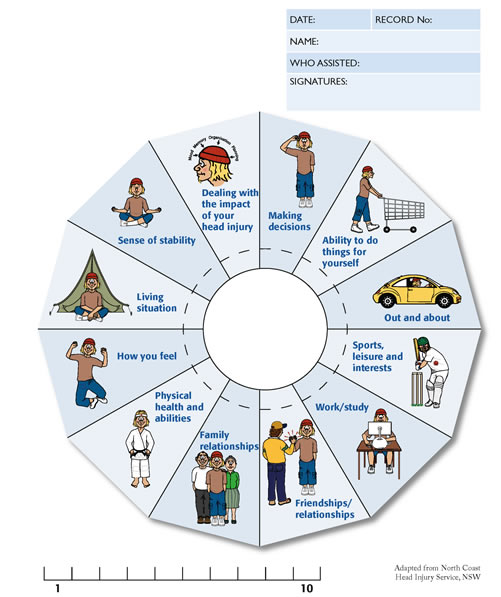
The transition wheel is based on Solution Focused Brief Therapy intervention. This model of therapy is strength-based, where the facilitator creates an atmosphere for change, exploring the issues in collaboration with the client. It allows the client and facilitator to explore how the client wants things to be different in their life. It looks at what these differences might look like, how the client describes their goals, how they might move toward these goals and how this can be done. The emphasis is on small steps to reach these goals, acknowledging each person’s lifestyle and life-values.
The wheel can be adapted for ease of use in helping young people to explore ways in which they can increase their independence as they move from children’s services to adult-based services during transition.
The wheel:
- Is holistic.
- Is a future-focused goal-development tool addressing quality of life issues, including areas where young people might improve their independence as they reach adulthood.
- Is driven by the young person.
- Sets the direction of the rehabilitation plan.
- Gives context and structure to assist people with memory impairments, organisational difficulties and attentional difficulties.
- Is an outcome measurement tool based on the outcomes valued by the individual.