- SELF STUDY MODULES
- 1. Intro to TBI
- 2. Communication
- 3. Skills for independence
- 4. Cognitive changes
- 5. Behaviour changes
- 6. Sexuality
- 7. Case management (BIR)
- 8. No longer available
- 9. Mobility & motor control
- 10. Mental health & TBI:
an introduction - 11. Mental health problems
and TBI: diagnosis
& management - 12. Working with Families
after Traumatic Injury:
An Introduction - 13. Goal setting
- 2.0 Aims
- 2.0A Take the PRE-Test
- 2.1 Communication
- 2.2 Sources of ommunication difficulties
- 2.3 Communication Problems
a) Dysphasia
b) Dysarthria
c) Dyspraxia
d) Non-verbal
AAC - 2.4 Cognitive problems
- 2.5 Social communication deficits
- 2.6 Tips for talking
- 2.7 Take home messages
- 2.8 Resources
- 2.9 Take the POST-Test
2.3 Communication problems
- i) Types of
problems - ii)
Dysphasia - iii)
Dysarthria - iv)
Dyspraxia - v) Non-verbal
communication - vi) Augemented
communication
Types of communication problems
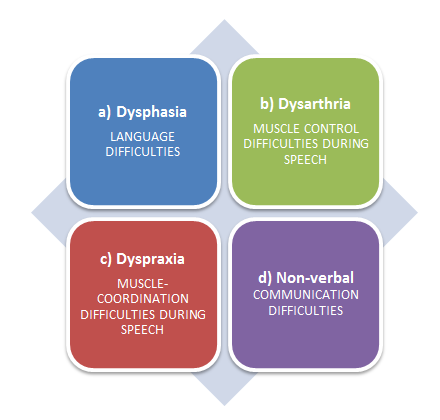
There are four kinds of communication problems that may be caused by damage to the communication areas of the brain. This module is focusing on:
TASKS
A. View a video
of a client.
B. Brainstorm what
types of communication difficulties does this person hvae.
C. Read the communication disorder description
D. Experience what it’s like to have this communication disorder
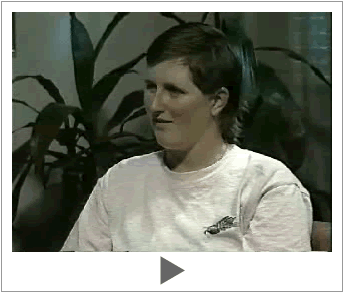
Click on the image to go to the video player. The video may take a few moments to load.
Dysphasia
Christine has dysphasia (also known as aphasia).
Dysphasia is an acquired impairment of language processes caused by damage to the receptive and expressive language areas of the brain.
Receptive Language
Understanding language in both spoken and written contexts.
Examples:
- Following directions or instructions
- Understanding what is read or heard
Expressive Language
Conveying yourself through spoken and written form.
Examples:
- Finding and using the right word
- Ordering words correctly in sentences
- Telling a story coherently
Dysphasia is not due to a difficulty moving the muscles to produce language; it is an impairment in the language area itself.
Experience what it's like to have dysphasia
Think of as many countries as you can that start with the letter 'L'. Go!
You may have felt like a word was on the “tip of the tongue”. To get to the word, you would have had to access your stored knowledge about names of countries, and specifically countries starting with “L”.
It might have taken some time to come up with an answer. People with word finding difficulties (a common feature of dysphasia) may have difficulty accessing information about words, and take more time to retrieve the words they want to say.
TASKS
A. View a video
of a client.
B. Brainstorm what
types of communication difficulties does this person hvae.
C. Read the communication disorder description
D. Experience what it’s like to have this communication disorder
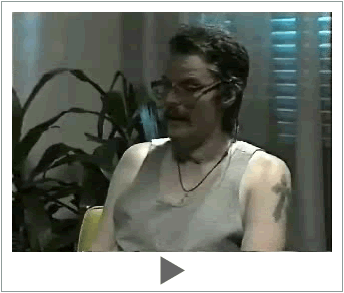
Click on the image to go to the video player. The video may take a few moments to load.
Dysarthria
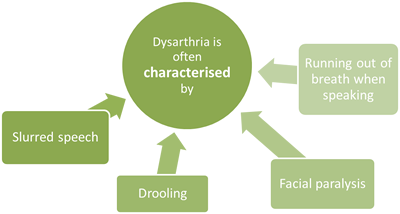
David has dysarthria. This is a speech disorder caused by a disturbance of control of the muscles that produce speech sounds. It does not necessarily mean the person has an impairment to the areas that control understanding and expressing language, but rather, means that they are unable to move the face and mouth muscles required to produce the sounds for speech.
Experience what it's like to have dysarthria
Try chewing two minties or other hard lollies while reading this page out loud. Go!
You probably noticed that it was more difficult to move your tongue when you were talking, and there was more saliva in your mouth. This made your speech difficult to understand.
TASKS
A. View a video
of a client.
B. Brainstorm what
types of communication difficulties does this person hvae.
C. Read the communication disorder description
D. Experience what it’s like to have this communication disorder
Click on the image to go to the video player. The video may take a few moments to load.
Dyspraxia
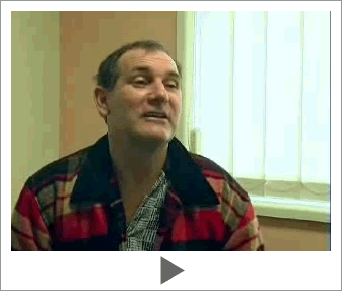
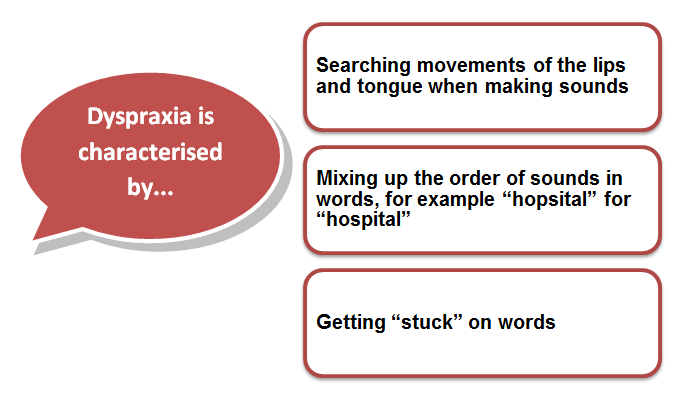
Sonny has dyspraxia. This is an impairment in the ability to coordinate and sequence muscle movements involved in speech. It does not necessarily mean there is any impairment in language understanding or expression, but means that while the person can make the muscle movements require for speech, they cannot co-ordinate muscles to make fluent speech.
Experience what it's like to have dyspraxia
Say the tongue twister "Mixed Biscuits" 5 times in 4 seconds
The sequence of mouth movements needed to produce the phrase, “Mixed Biscuits” was difficult. You knew what you wanted to say, but it was difficult to produce the words with sounds in the right order, and you may have produced some sounds incorrectly.
TASKS
A. View a video
of a client.
B. Brainstorm what
types of communication difficulties does this person hvae.
C. Read the communication disorder description
D. Experience what it’s like to have this communication disorder
Click on the image to go to the video player. The video may take a few moments to load.
Non-verbal communicator
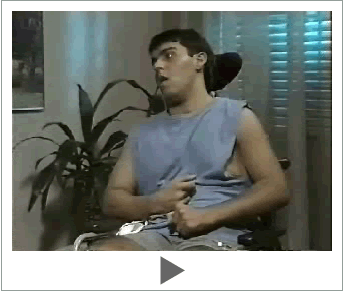
If a person, such as Daniel, have severe language and/or speech problems they may have difficulty expressing themselves verbally. He is defined as a nonverbal communicator.
Nonverbal communicators may use alternate means to communicate including:
- Gesture and body language
- Facial expression
- Vocalisations (e.g. groans)
Experience what it's like to have non verbal communication difficulties
Try and describe your favourite food without speaking
(Pretend someone is trying to understand your message if you do not have someone to practise this task with)
You were probably able to communicate quite a lot of information about your favourite food, even without using words. A person with severe communication difficulties may need to use non-verbal methods to communicate.
vi) Augmentative and Alternative Communication
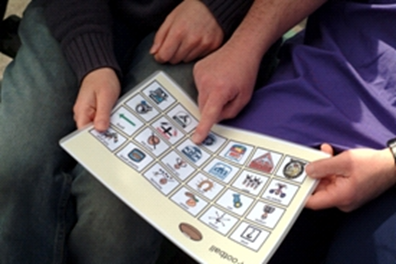
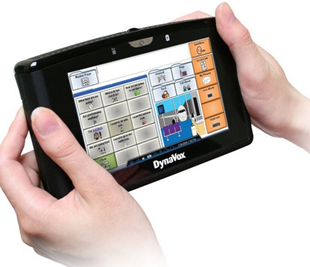
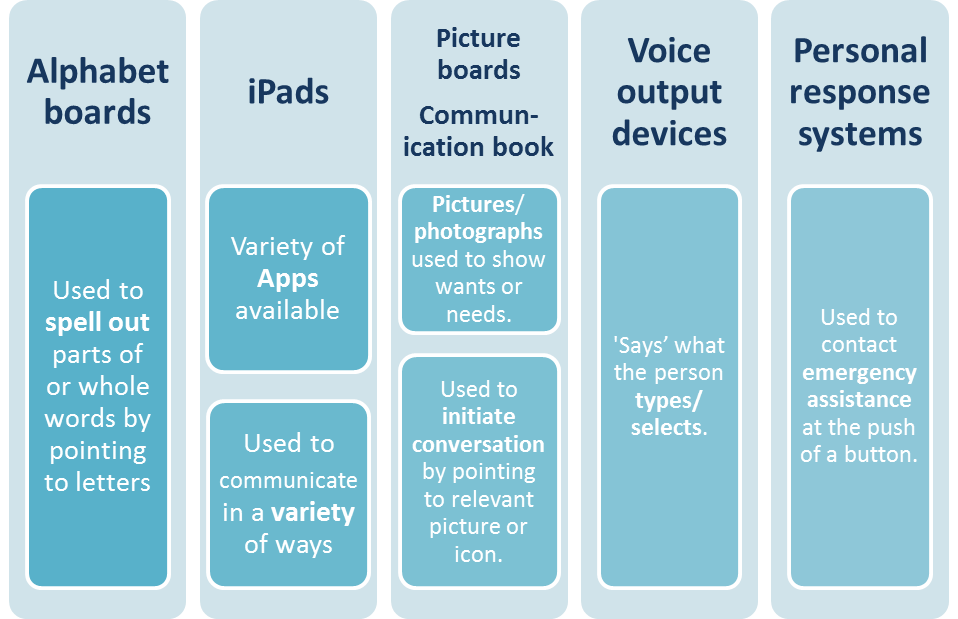
If a person has severe speech problem they may use an alternative method called AAC (Augmentative and Alternative Communication) to help them communicate. This may involve a variety of strategies, including:
- Picture, word or letter boards
- Technology aids (e.g. iPad or a specific AAC device)
AAC can help people with TBI successfully express what they want to communicate. Some people with TBI will also use AAC to help them understand what others are saying to them. AAC can be used by people of a range of language and cognitive levels. It can be used in all situations, including at work, at the shops and over the telephone (contact the National Relay Service for more details).
Common AAC devices include: