- SELF STUDY MODULES
- 1. Intro to TBI
- 2. Communication
- 3. Skills for independence
- 4. Cognitive changes
- 5. Behaviour changes
- 6. Sexuality
- 7. Case management (BIR)
- 8. No longer available
- 9. Mobility & motor control
- 10. Mental health & TBI:
an introduction - 11. Mental health problems
and TBI: diagnosis
& management - 12. Working with Families
after Traumatic Injury:
An Introduction - 13. Goal setting
- 2.0 Aims
- 2.0A Take the PRE-Test
- 2.1 Communication
- 2.2 Sources of ommunication difficulties
- 2.3 Communication Problems
a) Dysphasia
b) Dysarthria
c) Dyspraxia
d) Non-verbal
AAC - 2.4 Cognitive problems
- 2.5 Social communication deficits
- 2.6 Tips for talking
- 2.7 Take home messages
- 2.8 Resources
- 2.9 Take the POST-Test
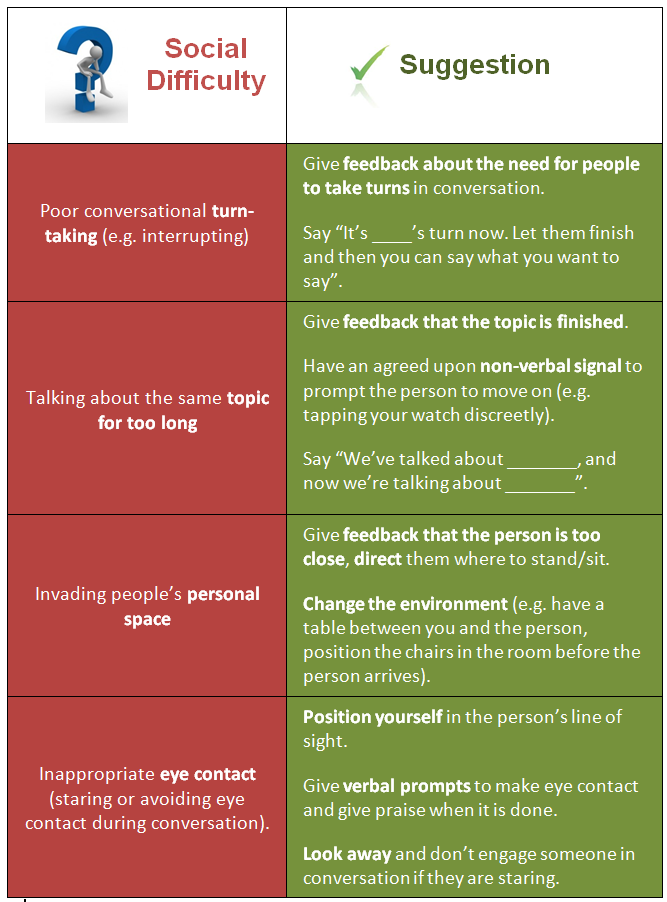
2.6 Tips for talking and to help manage difficult social situations
Tips for Talking
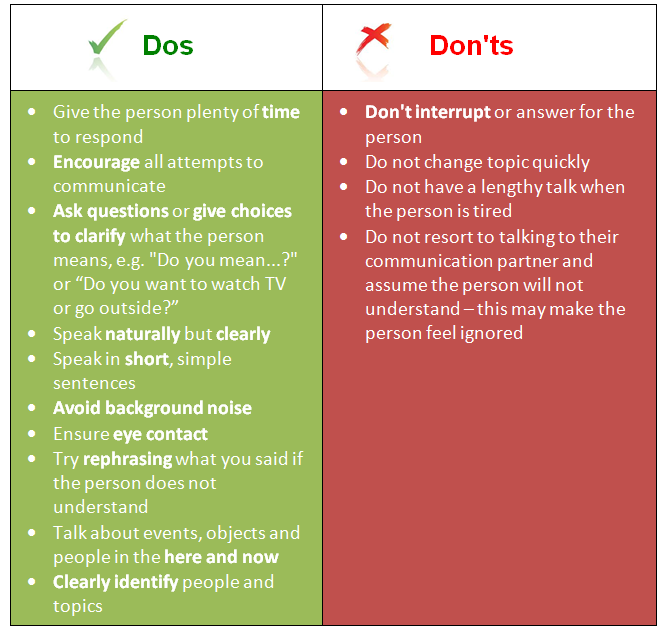
*Remember: the most important thing is the meaning behind the communication, not how well the person can put a sentence together!
Question
Joan has had a stroke which has affected her ability to talk and understand what others are saying. She is trying to tell you something but her speech is mumbled and she is getting her words mixed up. What could you do? (Click one of the options below)
More Tools and Tips
See Toolkit B: Promoting Independence - Section 10: Conversations for more practical tips