- SELF STUDY MODULES
- 1. Intro to TBI
- 2. Communication
- 3. Skills for independence
- 4. Cognitive changes
- 5. Behaviour changes
- 6. Sexuality
- 7. Case management (BIR)
- 8. No longer available
- 9. Mobility & motor control
- 10. Mental health & TBI:
an introduction - 11. Mental health problems
and TBI: diagnosis
& management - 12. Working with Families
after Traumatic Injury:
An Introduction - 13. Goal setting
- 2.0 Aims
- 2.0A Take the PRE-Test
- 2.1 Communication
- 2.2 Sources of ommunication difficulties
- 2.3 Communication Problems
a) Dysphasia
b) Dysarthria
c) Dyspraxia
d) Non-verbal
AAC - 2.4 Cognitive problems
- 2.5 Social communication deficits
- 2.6 Tips for talking
- 2.7 Take home messages
- 2.8 Resources
- 2.9 Take the POST-Test
2.5 Social communication deficits
Communication involves much more than words and sentences. It involves understanding and following a variety of social rules. This social part of communication is called “Pragmatics”.
TASK
A. Look at David's video again and brainstorm ideas about his social communication skills.
B. Read about imapirmenst and effects
C. Experience what it’s like to have this communication disorder

Click on the image to go to the video player. The video may take a few moments to load.
Social communication
After a TBI a person may have difficulty following the social rules and conventions of communication, even if they are able to pronounce words and use the correct grammar.
When these rules and conventions are broken, we often feel uncomfortable. What makes you feel uncomfortable during a conversation?
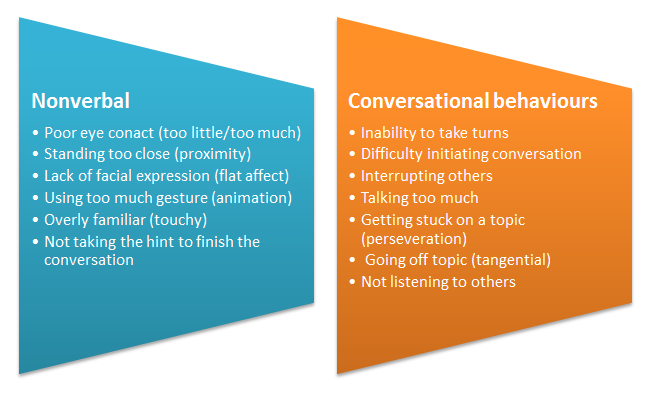
Experience what it's like to have pragmatic/ social communication deficits
Try to/remember having a conversation with someone about your weekend plans when they do not maintain eye contact with you.
Eye contact is one skill that is important to good communication. If you are talking to a person who does not have good eye contact, you may feel like they are not really listening, or you may be unsure how they are responding to what you are saying. People with a brain injury may have changes to their social communication skills that make it difficult for others to interact with them.