- SELF STUDY MODULES
- 1. Intro to TBI
- 2. Communication
- 3. Skills for independence
- 4. Cognitive changes
- 5. Behaviour changes
- 6. Sexuality
- 7. Case management (BIR)
- 8. No longer available
- 9. Mobility & motor control
- 10. Mental health & TBI:
an introduction - 11. Mental health problems
and TBI: diagnosis
& management - 12. Working with Families
after Traumatic Injury:
An Introduction - 13. Goal setting
3.1 Living - activities and skills
- i) Introduction
- ii) A person's
abilities - iii) A person's
life span - iv) Brainstorm Q
- v) Daily activities
i) Introduction
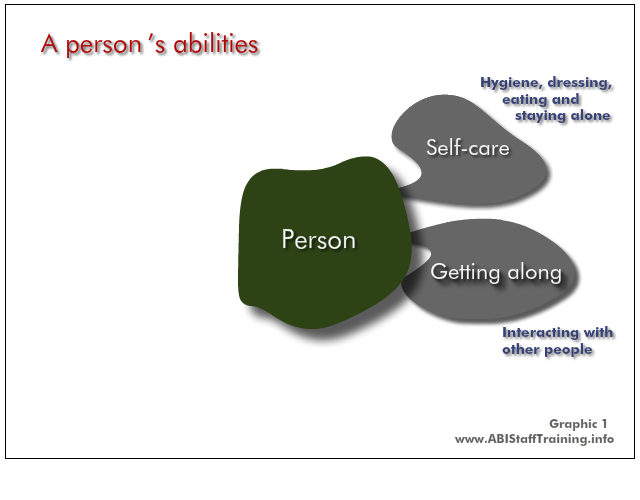
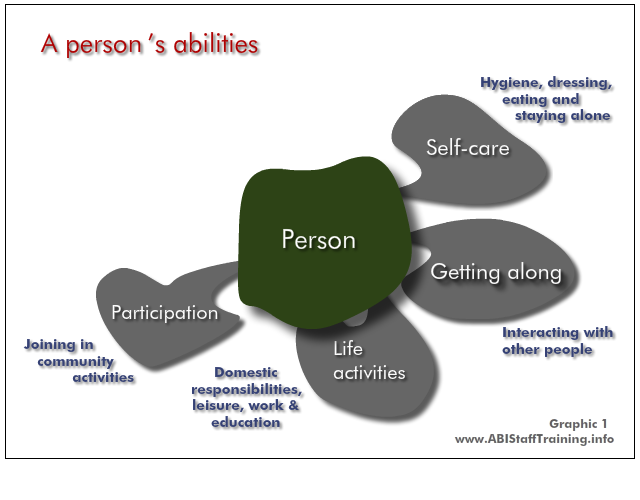
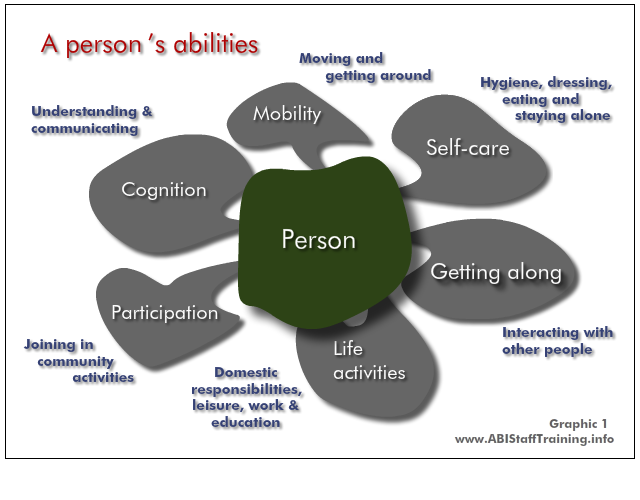
It is useful to consider acquired brain injury and developing skills for independence within the context of a healthy person's abilities and life span.
A person's life span typically moves through the stages of birth, pre school years, school years, young adult, middle age, retirement and old age. The person’s abilities and roles change throughout these life stages.
When a person suffers a brain injury these abilities and roles are disrupted, the extent of the disruption depends on the nature of the injury and the point in their lifespan it occurs.
In any rehabilitation program it is important to determine what roles the person fulfilled prior to their injury in order to focus therapy on relevant and meaningful roles. The person is more likely to engage in and succeed at returning to their previous roles if they are meaningful to them.
There will be people who due to the extent of their injury will be unable to return to their previous roles, the goals of therapy then becomes focussed on identification of new roles and goals.
ii) A person's abilities
SLIDES:
To pause: Hover mouse over slide. To continue: move mouse off slide.
To go to a specific slide: Click on slide numbers below.
iv) A person's life span
SLIDES:
To pause: Hover mouse over slide. To continue: move mouse off slide.
To go to a specific slide: Click on slide numbers below.
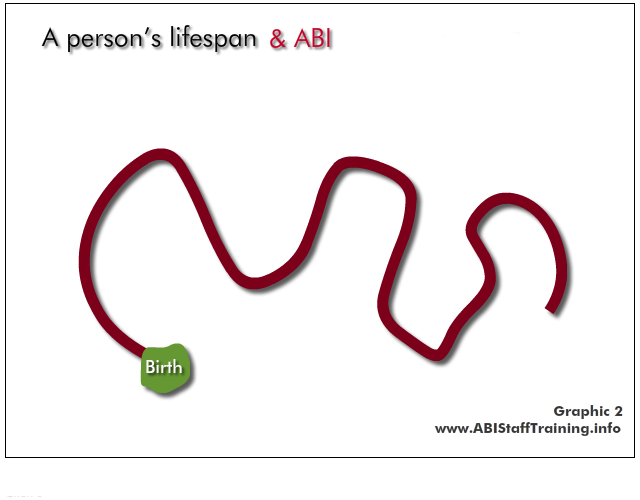
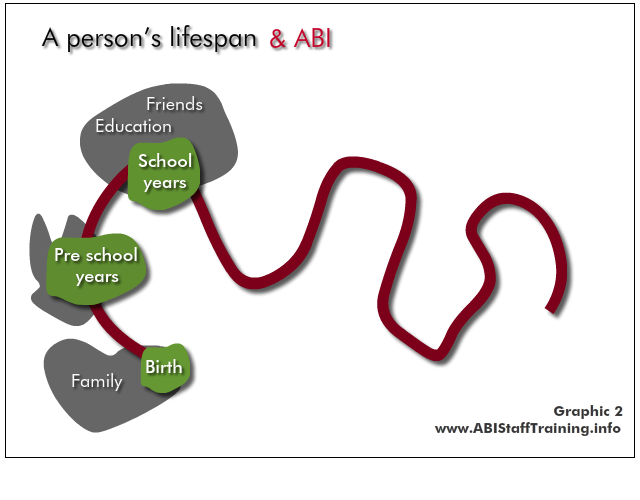
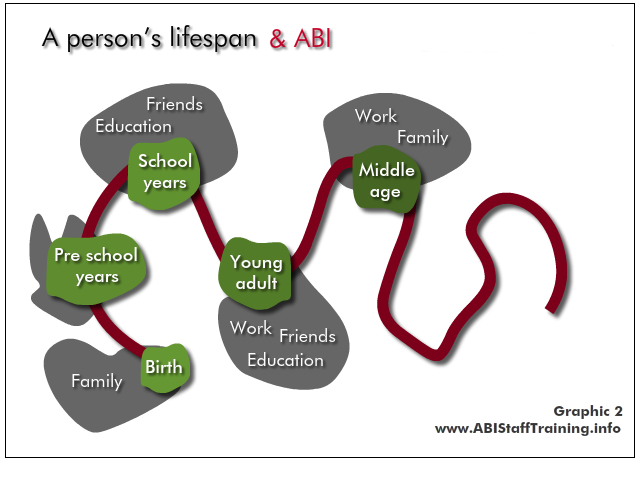
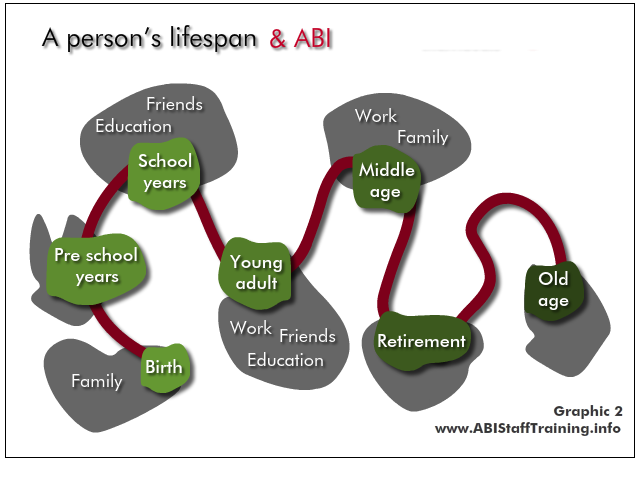
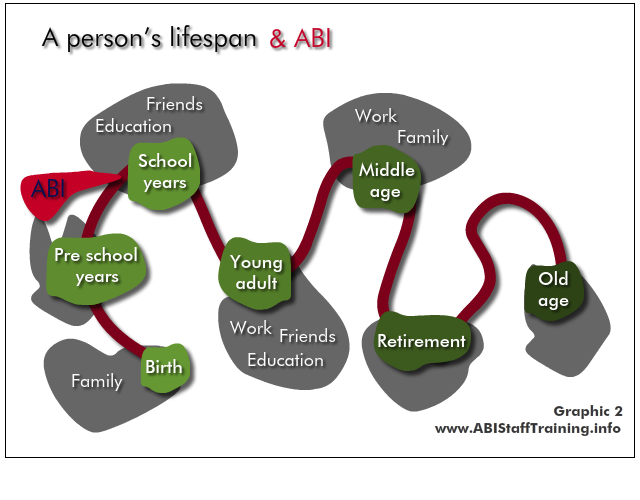
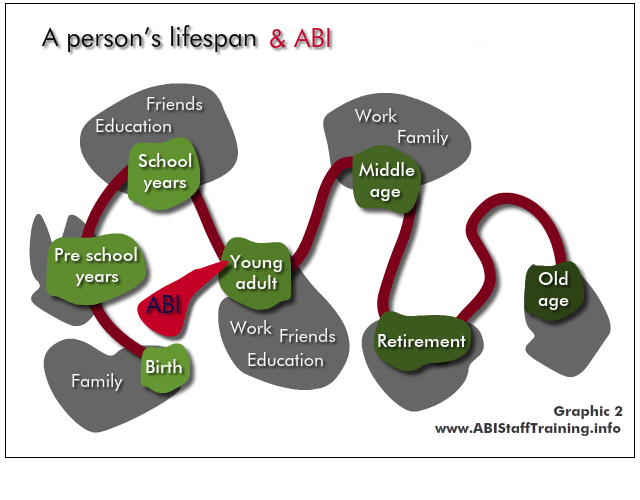
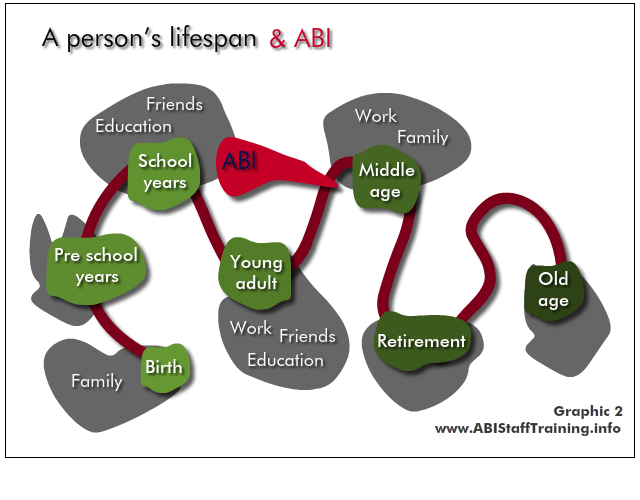
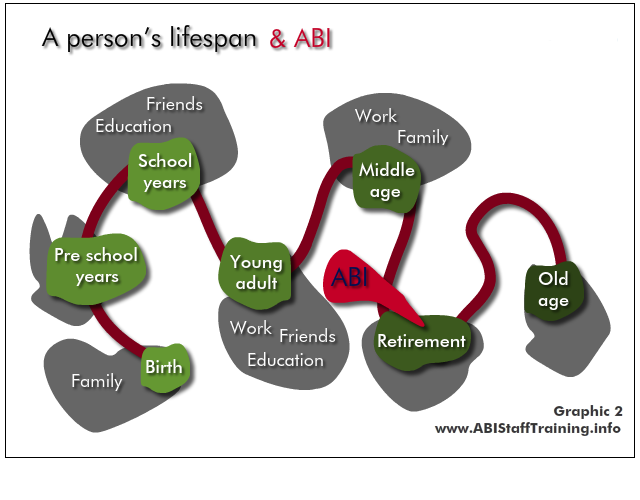
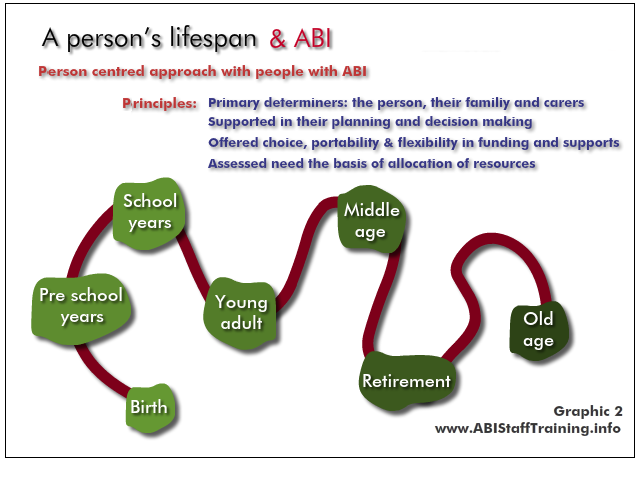
The implications for the person and their life are very different depending on when a TBI occurs.
iv) Brainstorm
Check your answers here

v) Daily life activities
Daily living activities are those tasks and roles a person routinely performs throughout their day. Some examples include:
- Personal care tasks (e.g. showering, grooming, toileting and personal
hygiene) - Mobility – ‘getting around’ – including walking, road sense, orientation, using transport
- Meal and snack preparation
- Domestic tasks (i.e.laundry, house cleaning, home maintenance)
- Shopping
- Paying bills and budgeting
- Taking medication
- Using the telephone
- Dealing with emergencies
- Organising activities for the day/week/month
What physical and cognitive skills do you need for these activities?
All daily living activities require a combination of physical and cognitive skills. A person with a brain injury will often have a number of deficits which will impact on their ability to complete daily activities. Some examples of skills include:
Physical:
- Mobility
- Transfers
- Arm/Leg (movement, strength, coordination)
- Sitting balance
Cognitive:
- Memory
- Initiation
- Attention
- Problem solving
- Planning and organising
- Concentration
- Communication
- Motivation
- Self monitoring
- Behaviour
- Insight